




Yaoshi Bang (HKEX: 09885) was founded in 2015 and is the largest digital integrated service platform in China’s out-of-hospital pharmaceutical industry. The company is committed to empowering pharmaceutical manufacturers, distributors, pharmacies, and primary healthcare institutions through digitalisation, promoting efficient pharmaceutical circulation.
Guided by its mission of “making quality healthcare and medicines accessible to all,” Yaoshi Bang has deeply penetrated grassroots markets and built a strong data-driven operational capability and continuously evolving business model.
The platform now covers:
Over 490,000 pharmacies
370,000 primary healthcare institutions
98.9% of counties in China
91.5% of townships nationwide
461,000 monthly active buyers
This has established one of the largest digital pharmaceutical transaction and service networks in China.
With rapid business expansion and increasing system complexity, the existing operations and maintenance (O&M) system faced new requirements and challenges:
1. Monitoring blind spots in a microservices architecture
Yaoshi Bang’s trading engine is built on microservices and containerised architecture. Tens of services interact in highly complex dependency chains. Before Bonree ONE, traditional monitoring tools were siloed and lacked cross-system correlation analysis capabilities.
2. Difficulty in quantifying and tracing user experience issues
As a B2B platform serving hundreds of thousands of pharmacies and healthcare institutions, front-end user experience directly impacts conversion and retention.
The platform spans Web, App, and Mini Program environments. However, performance issues such as:
Slow page loading
Delayed search responses
Transaction process latency
were difficult to systematically detect, quantify, and correlate with backend performance.
3. Manual, experience-driven incident resolution
In distributed environments, root cause analysis often relies on multiple teams and fragmented monitoring tools. Troubleshooting depended heavily on expert experience, lacking intelligent root cause analysis capabilities. This resulted in long mean time to recovery (MTTR) and reduced service continuity.
4. Operational pressure from rapid business growth
By 2025:
Revenue reached RMB 20.9 billion (+17.1% YoY)
Monthly SKU volume increased to 4.2 million
Order on-time delivery rate maintained at 96.7%
Rapid growth led to increasing system concurrency and data scale, putting significant pressure on operational stability and performance assurance.
APM
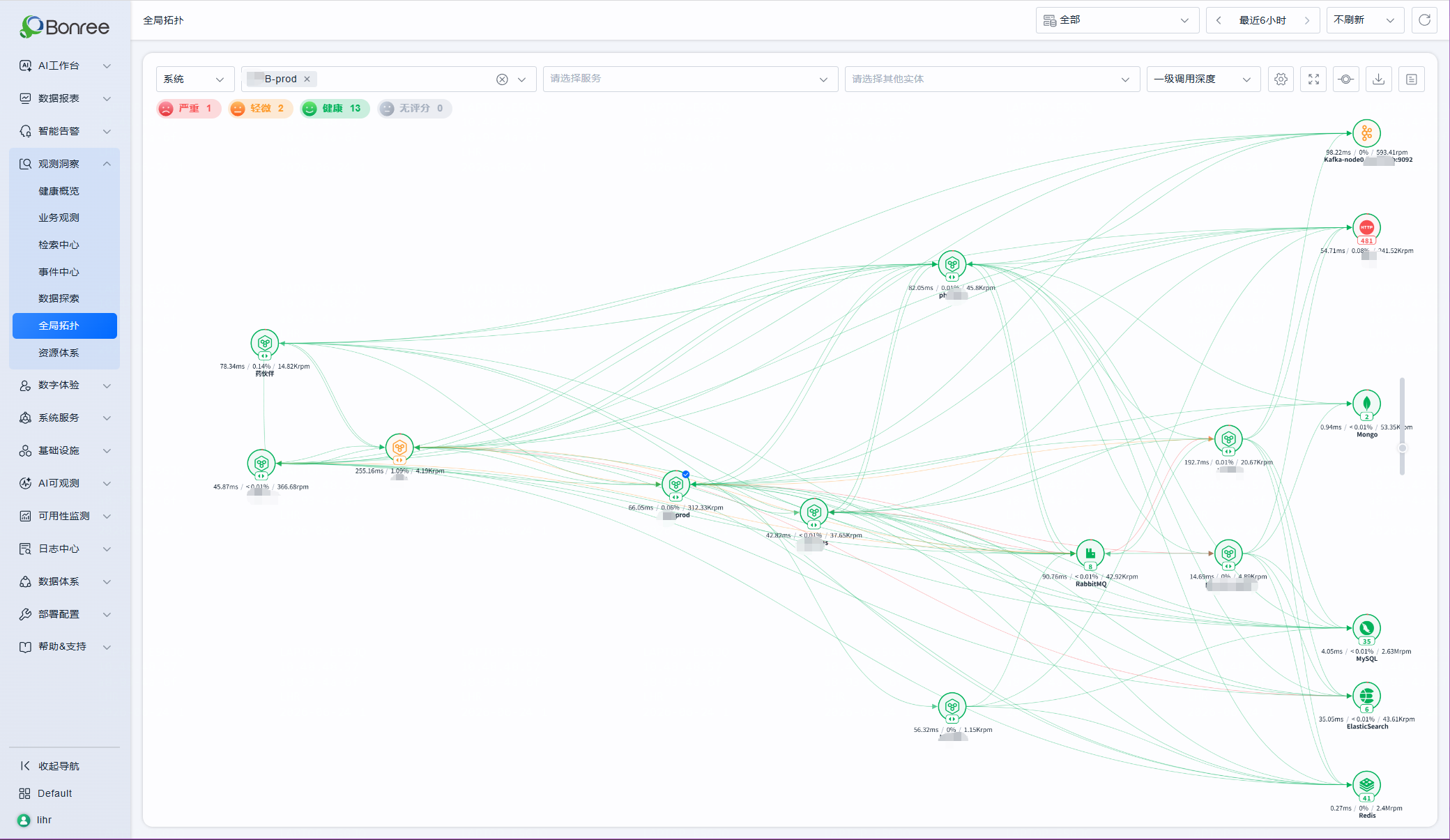
The APM module enables full-chain performance monitoring of backend microservices, covering Yaoshi Bang’s core trading and supply chain systems.
It provides deep code-level observability for key services such as:
Order processing
Inventory synchronisation
Intelligent replenishment
Key capabilities include:
Real-time distributed tracing topology
Precise identification of slow SQL queries
Memory leak detection
Third-party API timeout diagnostics
RUM (Real User Monitoring)
The RUM module enables detection of:
App crashes
UI lag
ANR (Application Not Responding)
JavaScript errors
Custom exceptions
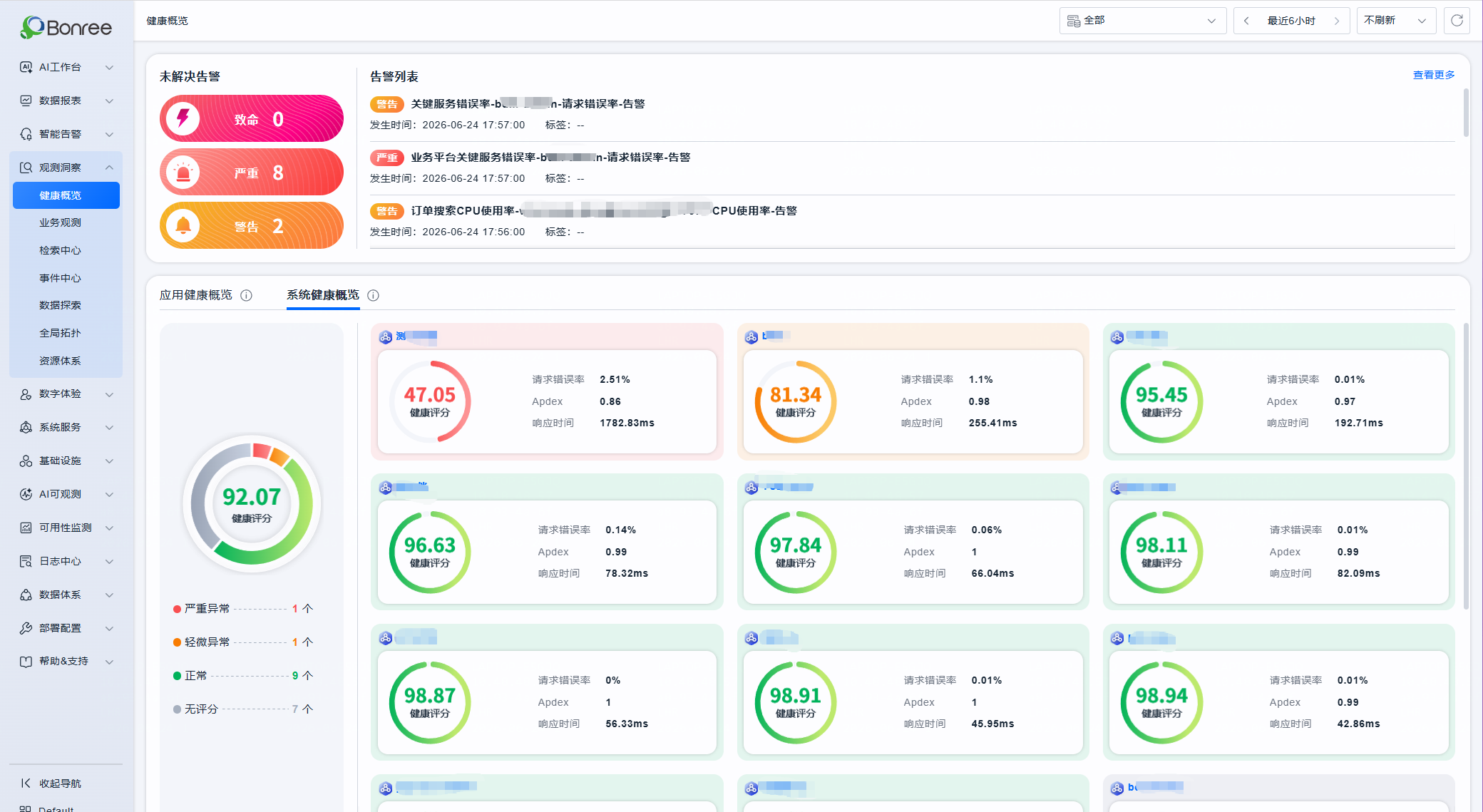
It also provides multi-dimensional analytics, including:
Application health scores
Regional user experience differences
Device compatibility analysis
This delivers full user experience context, allowing teams to understand real end-user behaviour and optimise product experience accordingly.
End-to-End Transaction Visibility
Every pharmaceutical transaction involves multiple stages:
product search → inventory validation → pricing calculation → order creation → payment settlement → logistics fulfilment
With Bonree ONE’s APM + RUM integration, operations teams can trace each transaction request across the full chain and quickly identify where performance bottlenecks or anomalies occur.
1. End-to-end observability built from zero to full stack
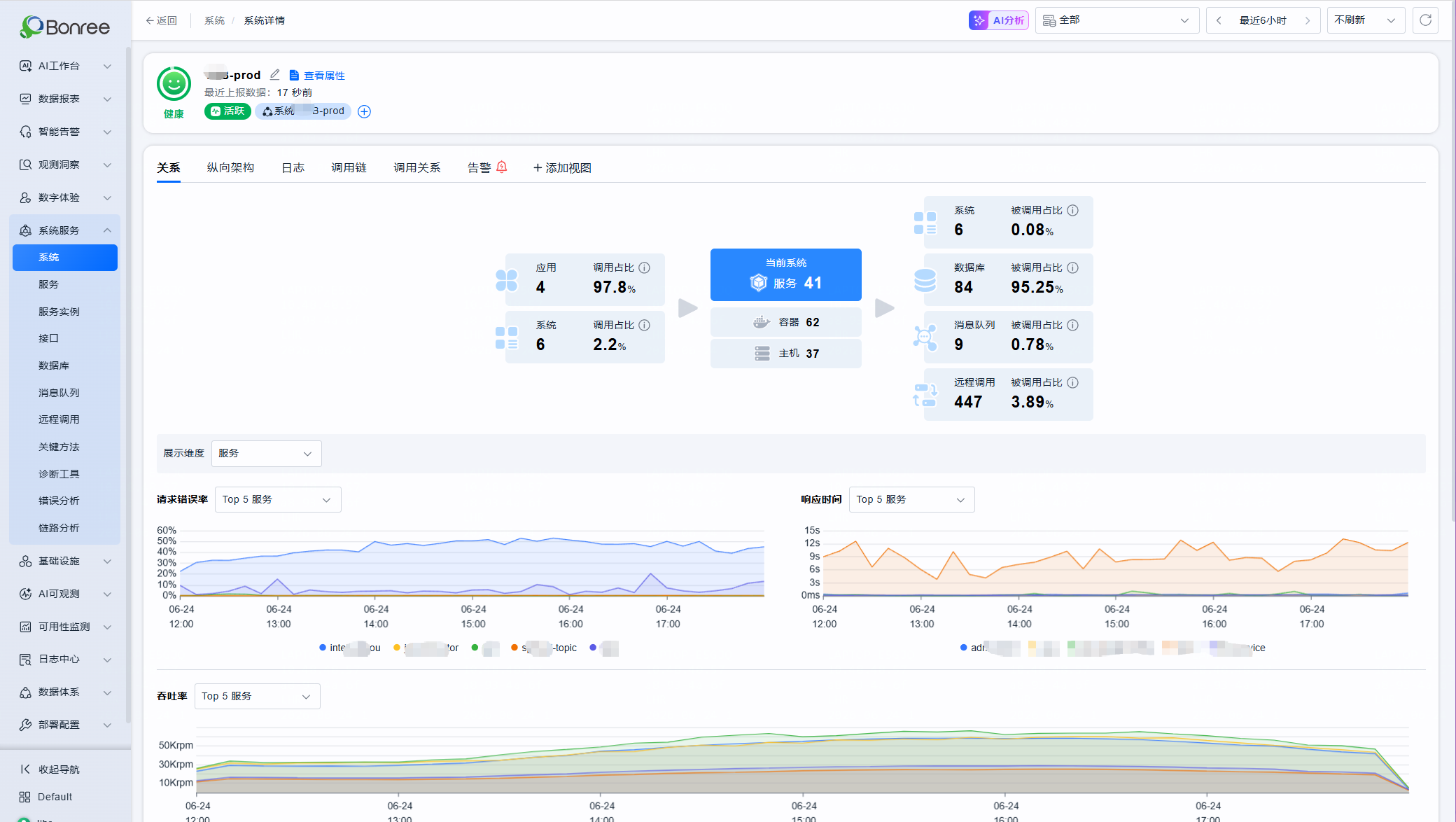
Through the deployment of APM and RUM modules, Yaoshi Bang established full-stack observability spanning:
Front-end user experience
Application services
Backend systems
Databases
Infrastructure
This enabled seamless correlation between user experience and backend performance, achieving full end-to-end tracing from page load to infrastructure layer.
2. Significant improvement in incident resolution efficiency
Mean Time to Identify (MTTI) was reduced by more than 60%.
Engineering and operations teams were freed from manual log analysis, significantly reducing troubleshooting costs and improving efficiency.
3. Quantifiable and optimisable user experience
For the first time, RUM enabled Yaoshi Bang to quantitatively measure user experience.
Key metrics such as:
Page load time
Search latency
Transaction conversion performance
became fully visible in real time.
This enabled precise optimisation of high-frequency workflows such as inventory entry and reconciliation used by pharmacists and clinic administrators.
As a result:
Core API response time reduced by 30%
Operational smoothness significantly improved for over 400,000 monthly active buyers
This further strengthened Yaoshi Bang’s competitive advantage in the lower-tier healthcare market.
Full-stack end-to-end observability
Bonree ONE provides comprehensive observability across:
user experience → application services → middleware → databases → infrastructure
Strong industry leadership
Member of China Academy of Information and Communications Technology (CAICT) AIOps Standards Working Group
Ranked No.1 in China APM and Observability (APMO) market share for consecutive years